


Ranking the most desperate teams in the 2026 NFL Draft
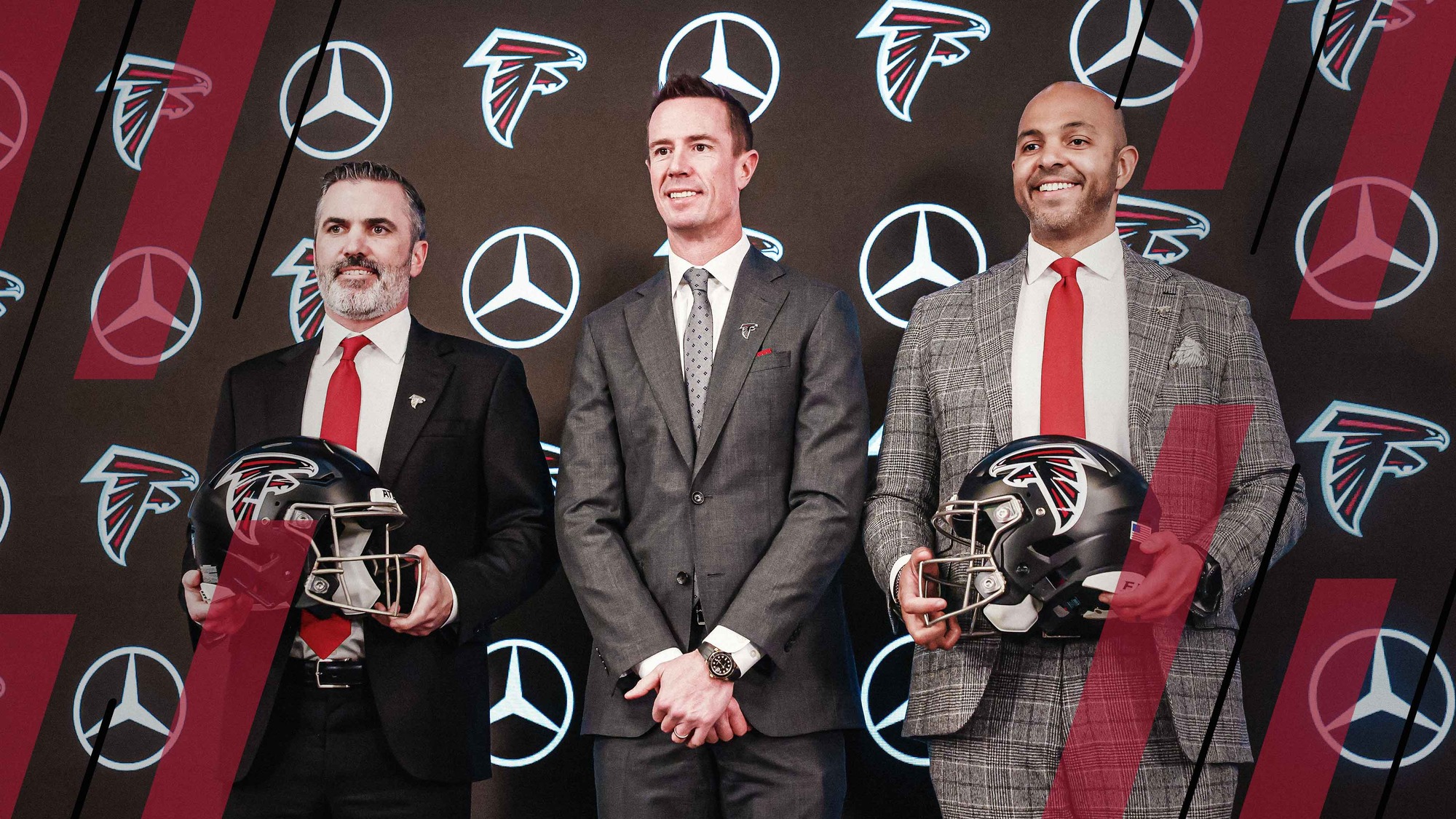
- The Falcons are in dire straits without a first-round pick: Matt Ryan and the new Falcons regime face many challenges this offseason, all of which are made more difficult by having to wait until pick No. 48 to make their first selection in this year’s draft.
- The Chiefs face some level of desperation after a down year: Several of the team’s key pieces are slated for free agency, and the front office doesn’t have a ton of cap space. It will be important for Brett Veach and company to nail the draft.
- 2026 NFL Draft season is here: Try the best-in-class PFF Mock Draft Simulator and learn about 2026’s top prospects while trading and drafting for your favorite NFL team.
As we head into NFL free agency and draft season, numerous teams are in dire need of one thing or another. Cap space to sign new talent or retain key pieces. Draft capital to inject young talent into the roster. Desperation can’t be quantified by a singular deficiency.
To better measure each franchise’s level of desperation as we move through the offseason, we’re going to look at a range of factors that may push each franchise closer to the brink. While some teams may be well situated in one facet, they may be desperate in another.
Those factors include:
- Current roster construction
- Pending free agents
- Available cap space
- Premium draft capital
Some questions even arise within each factor, making the task a bit more challenging. Questions such as, “Which is more favorable, having the No. 1 pick to select the best quarterback (i.e., the Las Vegas Raiders) or having four picks in the top-50 (i.e., the New York Jets) and finding a quarterback elsewhere?” Those evaluations lay at the core of this offseason.
No franchise is without hope, as many listed have paths to revival.
While this is an evaluation of current situations across the NFL, much is expected to develop over the coming months. So, let’s take a look at the (potentially) most desperate teams in the 2026 NFL Draft.
1. Atlanta Falcons
- Desperation factors: Current roster construction, pending free agents, available cap space, premium draft capital
- Asset factors: Core of young, foundational talent
As a team that missed the playoffs with an 8-9 record, the Falcons should be sitting in a decent position this offseason to re-sign a few key players, bring in a couple of veteran free agents and hold a top-half-of-the-order draft pick. The reality is: They are not.
The most glaring issue stems from the cap space dump that comes with shouldering a massive contract for a backup quarterback, as Kirk Cousins is. While the Falcons have confirmed plans to release Cousins at the start of the new league year (March 11), the move nets as little as $2.1 million in cap space (post-June 1 cut).
Combined with the decision to use the franchise tag on Kyle Pitts, the Falcons are left with little room to maneuver in free agency ($11.3 million). The team’s impending free agents, such as Kaden Elliss and David Onyemata, may walk as a result, leaving the defense in a poor spot.
To make matters worse, Atlanta’s first-round pick (13th overall) belongs to the Rams after the trade in last year’s draft. The Falcons will have to wait until pick No. 48 for their first selection. This is a difficult situation for Matt Ryan and the new regime to navigate.
2. New York Jets
- Desperation factors: Current roster construction, pending free agents, out of range for top rookie QB
- Asset factors: Ample cap space, draft capital
In terms of current roster construction, the Jets may be the NFL’s most desperate team. They have no solidified answer at quarterback, and there are few viable options in the draft. They are also still searching for their next defensive cornerstones to headline Aaron Glenn’s defense. Holes are everywhere for Gang Green.
Although the roster is in bad shape, the Jets stand well positioned to find answers for many of those questions, given their current spending power and draft capital. Currently armed with the fourth-most cap space ($79.3 million), New York can afford to be aggressive in the free-agent market. That includes acquiring new talent, as well as exhausting all options — including the franchise or transition tags — to entice Breece Hall to sign a multi-year deal.
However, the biggest hurdle for any team looking to spend big on the open market is selling free agents on the long-term vision, not just a lucrative contract. If New York can’t connect enough to sway key free agent targets, it would put more stress on their draft selections. Luckily, the Jets’ war chest is full of premium picks, with four selections inside the top 50 (Nos. 2, 16, 33 and 44), so the front office will need to find impact players and likely secure an answer at quarterback elsewhere.
3. Las Vegas Raiders
- Desperation factors: Current roster construction
- Asset factors: Ample cap space, draft capital, in position to take top rookie quarterback
Very little went well for the Raiders in 2025, hence their pick being first overall in this year’s draft. The roster is in rough shape, possessing little firepower on offense outside of Ashton Jeanty and Brock Bowers. The defense ranked 32nd in PFF team defense grade (49.2) in 2025, which could get worse if reports of a Maxx Crosby trade come to fruition.
Although the Raiders are staring down a massive rebuild, they possess the resources to make good headway this offseason. They will have ample cap space ($91.5 million) to make aggressive offers to high-priced free agents and are headed by a new coaching staff led by Klint Kubiak, fresh off a Super Bowl victory with the Seahawks. The combination of cash and coaching should entice quality free agents to make Las Vegas their next home, in a similar fashion to the aggressive approach the New England Patriots took last offseason, one that resulted in a conference championship.
As far as the draft foes, the Raiders’ selection is seen as a foregone conclusion. Given the team’s need for a franchise signal-caller, and there being just one quarterback prospect standing well above the rest, Indiana’s Fernando Mendoza is widely considered the only logical selection.
That puts the Raiders in the driver’s seat to build up their roster by other means with a quarterback on a rookie contract. The question then turns to how well Kubiak can develop both Mendoza and Jeanty to get this franchise on track.
4. Cleveland Browns
- Desperation factors: Current roster construction, pending free agents, available cap space
- Asset factors: Generational defensive cornerstone (Myles Garrett)
Last season, the Browns’ main questions were at quarterback. With Deshaun Watson potentially able to take the field this season, in addition to the flashes shown from Shedeur Sanders in his rookie campaign, the quarterback position projects more favorably than a year ago — albeit, not without some questions.
But Watson, once again, carries the largest cap hit in the NFL ($80.7 million in 2026), which largely hinders the Browns’ ability to spend in free agency ($3.2 million in available cap space), not only in terms of acquiring new talent to revamp the roster but also to retain their own key pieces.
The offensive line will likely be hardest hit, with six players who made a start heading for free agency, including their leader up front, Joel Bitonio. The difficulties don’t stop there, as they also face losing a key piece of the defense and the fourth-highest-graded linebacker of the 2025 season, Devin Bush.
Without much spending power on the open market, the Browns are staring down a pivotal 2026 NFL Draft, especially as it pertains to securing prospects who are capable of being day one starters with their two picks in Round 1 (Nos. 6 and 24). Even still, some of their many needs will likely go unsolved.
5. Washington Commanders
- Desperation factors: Current roster construction, pending free agents, premium draft capital
- Asset factors: Young, capable quarterback (Jayden Daniels)
As mentioned in our look at teams that could be active traders in Round 1, the Commanders have a multitude of needs on defense and very little draft capital to address those deficiencies, possessing just three picks inside the top 150 (Nos. 7, 71 and 145).
To make matters worse, the Commanders have numerous decisions to make regarding impending free agents, including Bobby Wagner, Deebo Samuel and Marcus Mariota. While Washington is situated well in terms of cap health ($73.6 million), the front office will likely need to weigh its options in terms of which players to re-sign and who can be replaced in free agency.
Given the plethora of needs at key positions and limited draft resources, the Commanders could enter draft day in a tough position, should they be unable to draw in free agents to fill out the roster.
6. Dallas Cowboys
- Desperation factors: Current roster construction, pending free agents, available cap space
- Asset factors: Offensive powerhouse
While the Cowboys can hang their hat on a high-powered offense, two key priorities carry heavy weight this offseason: George Pickens‘ future and rebuilding one of the NFL’s lowest-graded defenses.
Although Dallas has already rewarded Javonte Williams with a contract extension (three years, $24 million), the team’s cap situation is dire. Dallas ranks dead last in available cap space (-$55.3 million), which presents a massive hurdle to those aforementioned key priorities, particularly retaining Pickens. The talented receiver is projected to receive offers of upwards of $30 million per year, leaving the Cowboys to ponder potential tag-and-trade opportunities.
As for the defense, the draft seems to be the most prudent path to improvement, after the unit ranked last in the NFL in EPA per play allowed in 2025. Armed with two first-round picks (Nos. 12 and 20), the Cowboys stand a solid chance of selecting a pair of standout defenders to amplify the unit. Yet, without a selection in Rounds 2 or 3, the pressure is high for Dallas to hit on those premium picks.
7. Kansas City Chiefs
- Desperation factors: Pending free agents, available cap space
- Asset factors: Generational quarterback (Patrick Mahomes), acclaimed coaching staff, championship pedigree
After a disappointing end to their nine-year run as AFC West champions, the Chiefs will aim to reload and make a run at the division again in 2026. The problem: an exodus of key players on both sides of the ball, and little cap space to retain them all.
Jaylen Watson, Bryan Cook and Leo Chenal headline potential departures on defense, while Travis Kelce, Juju Smith-Schuster, Marquise Brown, Isiah Pacheco and Kareem Hunt face the same fate on offense. Patrick Mahomes already restructured his contract to open $43 million in cap space, yet the Chiefs still have a $3.2 million cap deficit. While other players could face contract restructures or be cap casualties, the Chiefs are unlikely to be able to retain everyone, let alone sign a recently released former receiver (Tyreek Hill).
As far as assets go, the Chiefs are in an unfamiliar and fortuitous situation, slated to make a pick in the top 10 for the first time since trading up to select Patrick Mahomes in 2017. The pick should net them another structural piece to the roster, but with numerous holes, the pressure is there to draft a strong rookie class. Luckily, Chiefs general manager Brett Veach has a solid track record for finding talent on draft day.