


10 boom-or-bust players in the 2026 NFL Draft
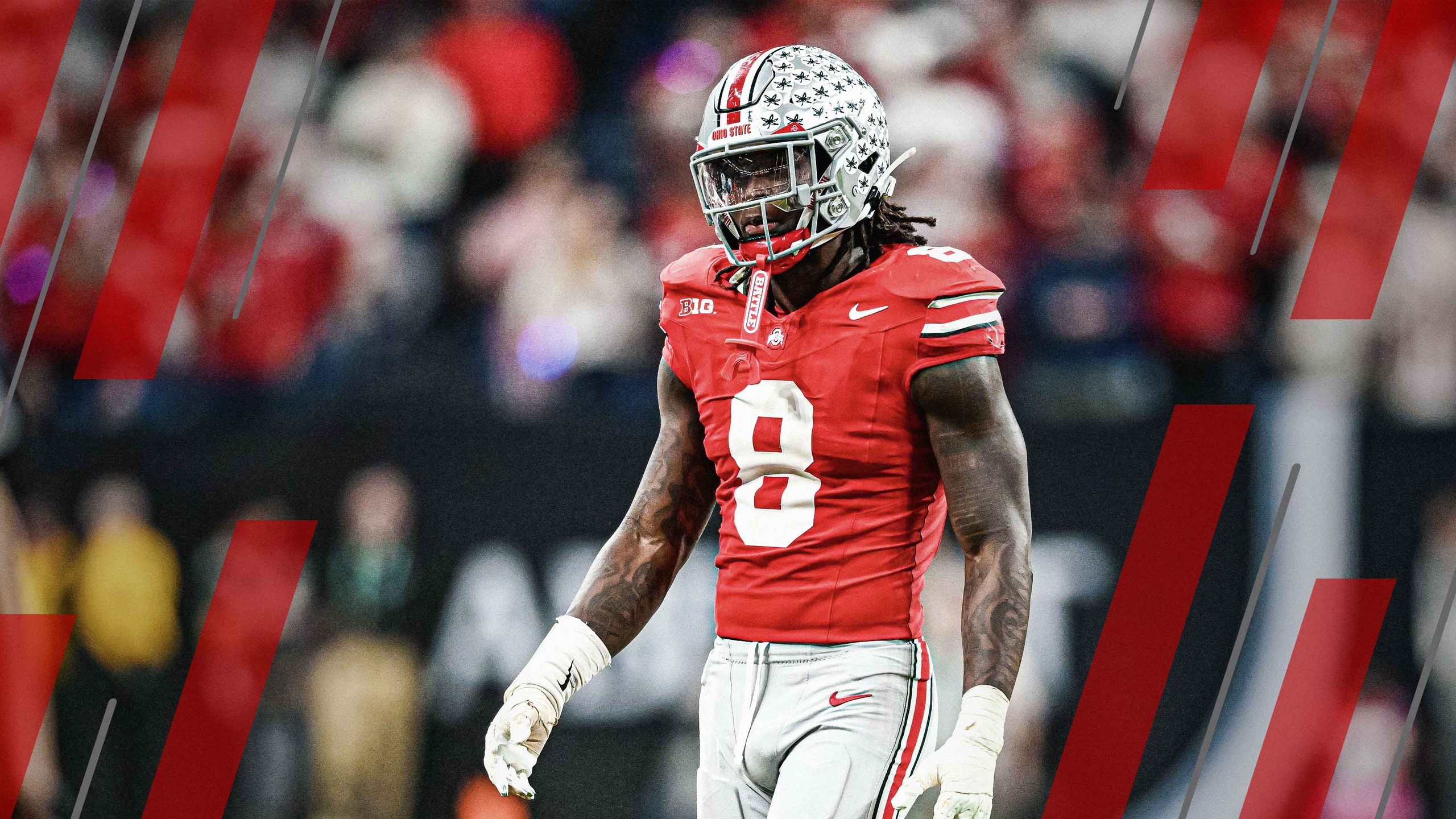
- Arvell Reese is the biggest boom-or-bust player in the draft: The Ohio State linebacker is the projected No. 2 overall pick even though there are questions about what position he’d play in the NFL.
- Multiple projected first-round picks have injury concerns: Wide receiver Jordyn Tyson, cornerback Jermod McCoy and defensive tackle Caleb Banks all have injury histories that need to be checked out.
- 2026 NFL Draft season is here: Try the best-in-class PFF Mock Draft Simulator and learn about 2026’s top prospects while trading and drafting for your favorite NFL team.
Estimated Reading Time: 6 minutes
Prepare for the 2026 NFL Draft with PFF+
Your complete draft preparation toolkit
The 2026 NFL Draft certainly isn’t as top-heavy as previous drafts have been. There are very few “can’t miss” prospects in this class, and most of the top players have significant questions in their scouting reports.
The following are the 10 biggest “boom or bust” prospects in this upcoming draft: players who have alluring upside but also major concerns that must be addressed.
LB Arvell Reese, Ohio State
Reese is currently projected as the No. 2 overall pick by the New York Jets, but there are still questions about how he’ll translate to the next level. For starters, will he be a linebacker, an edge defender or some combination of the two? Many believe he can make the transition from off-ball linebacker to edge defender like Micah Parsons, Abdul Carter and Jalon Walker have. However, Reese’s 13% pass-rush win rate this year was still significantly lower than all of them had in their last collegiate seasons.
Pass-rush win rates in final years of college
| Name | School | Season | Pass-rush win rate |
| Abdul Carter | Penn State | 2024 | 22.6% |
| Micah Parsons | Penn State | 2019 | 20.7% |
| Jalon Walker | Georgia | 2024 | 17.2% |
| Arvell Reese | 2025 | 13.0% |
Granted, Carter played edge defender in his final season at Penn State, but he had an even better 24.8% pass-rush win rate while playing linebacker in 2023. Reese also had just a 56.6 PFF coverage grade this year, clouding his future at off-ball linebacker as well. He’s a physically gifted player who could turn into a star at the next level, but drafting him will just be based more on projection than production.
WR Jordyn Tyson, Arizona State
Tyson has plenty of production to bank on, posting an 89.5 PFF receiving grade over the last two seasons that ranks fifth in the Power Four. The issue with the projected top-10 pick is injuries.
He missed 15 games across the 2022 and 2023 seasons at Colorado due to a torn ACL, MCL and PCL. Tyson missed both the Big 12 Championship Game and College Football Playoff Quarterfinal in 2024 due to a collarbone injury. He was also out for three games this past season due to a hamstring injury.
If Tyson can stay on the field, he can be a No. 1 wide receiver for a franchise. That’s a big “if” though, and his medicals will go a long way in determining how high he is selected in April.
CB Jermod McCoy, Tennessee
Like Tyson, McCoy has phenomenal tape to warrant a high draft selection. He was ninth in the FBS with an 89.6 PFF coverage grade as just a true sophomore. However, also like Tyson, there are some injury concerns.
McCoy missed the entire 2025 season with a torn ACL that he suffered in an offseason workout last January. He’s expected to be fully recovered in time for the NFL Combine and a big week there, both on the field and in medical testing, could solidify McCoy as a top 15 pick.
EDGE Keldric Faulk, Auburn
Faulk is one of the best edge defenders against the run in this class, tallying an 89.2 PFF run-defense grade since 2024 that ranks fourth in the Power Four. There’s a bit more projection as a pass rusher, though.
His 11.6% pass-rush win rate this past season was just 150th among all edge defenders in the nation. Faulk was also 150th in 2024 with an 11.5% win rate. For a projected top-15 pick, you’d like a bit more polish as a pass rusher.
Faulk is a bit like the Shemar Stewart of this draft class: the tools and run defense are fantastic, but there’s not a lot of pass-rush production to bank on.
TE Kenyon Sadiq, Oregon
Sadiq seems poised to become the fifth tight end to go in the first round over the past four drafts, joining the likes of Dalton Kincaid, Brock Bowers, Colston Loveland and Tyler Warren. His career PFF receiving grade still doesn’t come close to what those four players had, though.
Career PFF receiving grades among first-round tight ends since 2023
| Name | School | Career PFF receiving grade |
| Dalton Kincaid | Utah | 92.3 |
| Tyler Warren | Penn State | 90.6 |
| Kenyon Sadiq | 73.7 |
Sadiq is still an excellent separator who brings it as a run blocker and is dangerous after the catch. He must clean up his drop issues, and expectations should be set lower than the first-round tight ends we’ve gotten in recent years.
OT Kadyn Proctor, Alabama
Proctor finally put his freakish tools together this past season, posting an 86.1 PFF grade that placed fourth among all tackles in the country. However, he has been prone to getting beaten by speed rushers in the past and often struggles in space, thanks to his gargantuan 6-foot-7, 366-pound frame. Those issues lead some to question whether the projected top-20 pick can stick at tackle long term in the NFL or if he needs to kick inside to guard.
EDGE Cashius Howell, Texas A&M
Howell is a projected top-20 pick thanks to how productive he’s been as a pass-rusher over the last three years, one at Bowling Green and two at Texas A&M. He’s earned 90.0-plus PFF pass-rush grades in each of those seasons, and his 93.0 pass-rush grade since 2023 is fourth in America.
Howell is a bit undersized, at 6-foot-2, 248 pounds, and that shows up in the run game, where he has a career 73.1 run-defense grade. He also reportedly has sub-31-inch arms, which would put him in the 0th percentile for edge defenders.
QB Ty Simpson, Alabama
In most years, the second-best quarterback in the draft would still be a top-five pick. While Simpson seems to have a stranglehold on QB2 in this class, he still may fall out of the top 20. He did mostly impress in his lone season as Alabama’s starter, leading the FBS with 30 big-time throws.
Simpson is very good when defenses leave him alone in the pocket, placing 11th nationally in both PFF passing grades when kept clean and when he’s not blitzed. He has far more issues when defenses try to speed him up, though. Simpson was 87th in passing grade when pressured and 53rd against the blitz. Whoever drafts him would be wise to let him sit for a year while he adjusts to the speed of the NFL.
DI Caleb Banks, Florida
Banks has been a productive pass-rusher throughout his entire career at Florida, which is why he’s a projected top-25 pick. His 12% pressure rate since 2023 is sixth among Power Four defensive tackles during that stretch. However, he missed nine games this past season due to a foot injury and has just a 69.4 PFF run-defense grade for his career. Banks did have a strong showing at the Senior Bowl, but there are still risks in taking him with a first-round pick.
WR Zachariah Branch, Georgia
Branch was a top-five overall recruit out of high school and finally showed why after transferring to Georgia from USC. The projected top-50 pick’s 82.0 PFF grade led all SEC wide receivers, while his 634 yards after the catch were the second-most in the Power Four.
There are questions about how Branch’s game will translate to the league, though. Out of his 93 targets, 51 came behind the line of scrimmage (54.8%), and his average depth of target of 3.6 yards was the fifth-lowest in the country. Is he merely a gadget player, or can he utilize his elite agility and speed to become a more complete receiver in the NFL?